So Why Doesn't Everyone Build Manor Houses?
Fair question. Three reasons.
Cost and complexity. Manor houses are Class 2 buildings under the Building Code of Australia. This means fire-rated construction, acoustic separation between dwellings, stricter compliance requirements, and higher build costs per square metre. The construction cost gap between a duplex and a manor house can be $400,000 to $600,000 on a comparable project.
Finance. Banks treat four-dwelling projects as commercial development rather than residential construction. That means higher interest rates, lower LVR (typically 65% of project value rather than 80%), and often presales requirements before funds are released. For first-time developers this can be a significant barrier.
Time. Manor houses must go through a full Development Application with council. No CDC shortcut available. Depending on site complexity and council workload, this adds four to eight months to your timeline compared to a duplex CDC. Holding costs during that period add up.
Which One Is Right For Your Site?
The honest answer depends on three things.
Your equity position. If you have $400,000 to $500,000 in equity, a duplex is financeable through standard residential lending. A manor house needs $700,000 to $900,000 minimum as an equity contribution to satisfy commercial lenders.
Your timeline. If you need to complete and sell within 12 to 14 months, duplex is your path. If you have 18 to 22 months available, the manor house margin justifies the extra time.
Your site. Not every site suits a manor house. You need 600sqm minimum, at least 12 metres of frontage, and you must be within 800 metres of a nominated station. Check the NSW Planning Portal before you assume your site qualifies.
The Bottom Line
For developers with the equity, the timeline, and the right site — the manor house is the superior financial outcome in Western Sydney right now. The $1 to $2 million revenue uplift over a duplex on the same block is real, and the market is still pricing land based on duplex values in many cases.
For first-time developers or those working with tighter equity — start with the duplex. Simpler finance, faster approval, strong market demand, and a proven product. Build your track record, then scale up.
The most expensive mistake is buying the wrong product for your equity and timeline. Get the feasibility right before you commit to either path.
Altyra Group provides feasibility assessments, DA management, and pre-construction coordination for residential developers across Greater Sydney. If you are weighing up a duplex or manor house on a specific site — contact us for a free 30-minute consultation.
Duplex vs Manor House: Which Makes More Money in Western Sydney?
It All Begins Here
If you own a 600-700sqm block in Western Sydney — or you are looking to buy one — this is the question that matters most right now.
Do you build a duplex and sell two premium dwellings? Or do you take advantage of the 2025 planning reforms and build a manor house with three or four dwellings instead?
Both are viable. Both are being done right now in Blacktown and Cumberland. But they are not equal — and understanding the difference before you commit could mean the difference between a $300,000 profit and an $800,000 profit on the same piece of land.
Here is the honest breakdown.

What Changed in 2025
It All Begins Here
Before February 2025, most R2 Low Density Residential blocks in Western Sydney were limited to a duplex — two dwellings maximum. That was it. The only way to get more yield was to find an R3 zoned site, which came at a significant land price premium.
Then Stage 2 of the NSW Low and Mid-Rise Housing Policy changed everything.
If your site is within 800 metres of a nominated train station — Blacktown, Seven Hills, Doonside, Auburn, Granville, Merrylands and others — you can now build a manor house. That means three or four dwellings on the same standard residential block that previously could only hold two.
The land price has not fully caught up with this reality yet. Which means right now, in 2026, there is a genuine arbitrage window for developers who move quickly.
The Duplex: What The Numbers Look Like
It All Begins Here
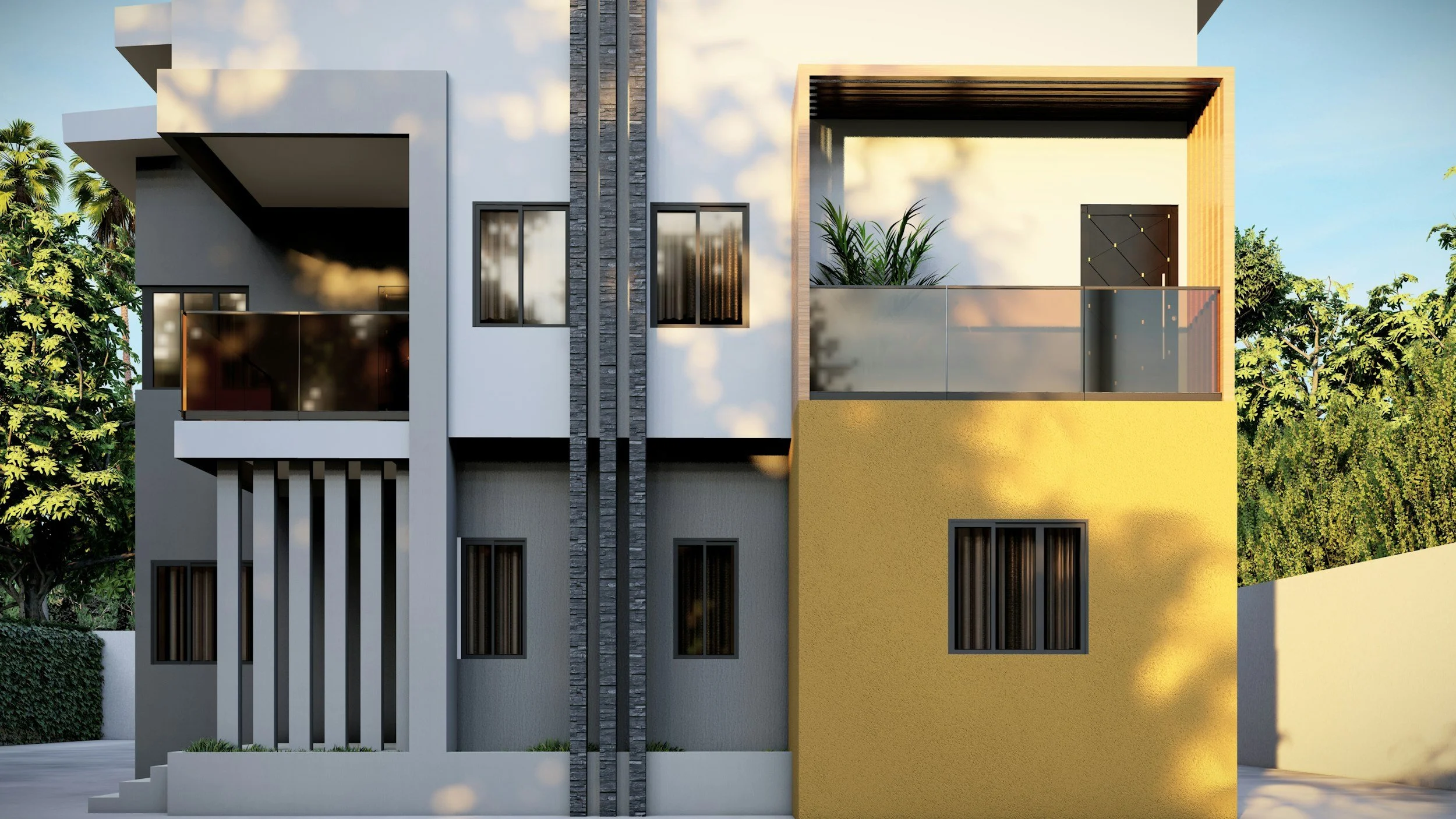
A well-executed luxury duplex in Blacktown or Seven Hills — five bedrooms, three bathrooms, Torrens title, high specification finishes — is currently selling for $1.45 million to $1.75 million per side.
Let's use a conservative $1.55 million per side.
Duplex project — rough numbers:
Gross Realisation Value: $3,100,000 (2 x $1,550,000)
Land cost: $1,200,000
Construction (Class 1a, ~520sqm): $1,250,000
Soft costs, contributions, selling: $200,000
Total Development Cost: approximately $2,650,000
Net profit: approximately $450,000
Margin on cost: approximately 17%
The duplex has one significant advantage: it is simpler. Class 1a construction is cheaper and faster. You can often get CDC approval in 20 days, bypassing council entirely. And there is deep buyer demand for Torrens title duplexes from owner-occupiers and investors alike.
The risk is also lower. If the market softens, a $1.55 million duplex half still finds a buyer faster than a $1.2 million townhouse.
The Manor House: What The Numbers Look Like
It All Begins Here
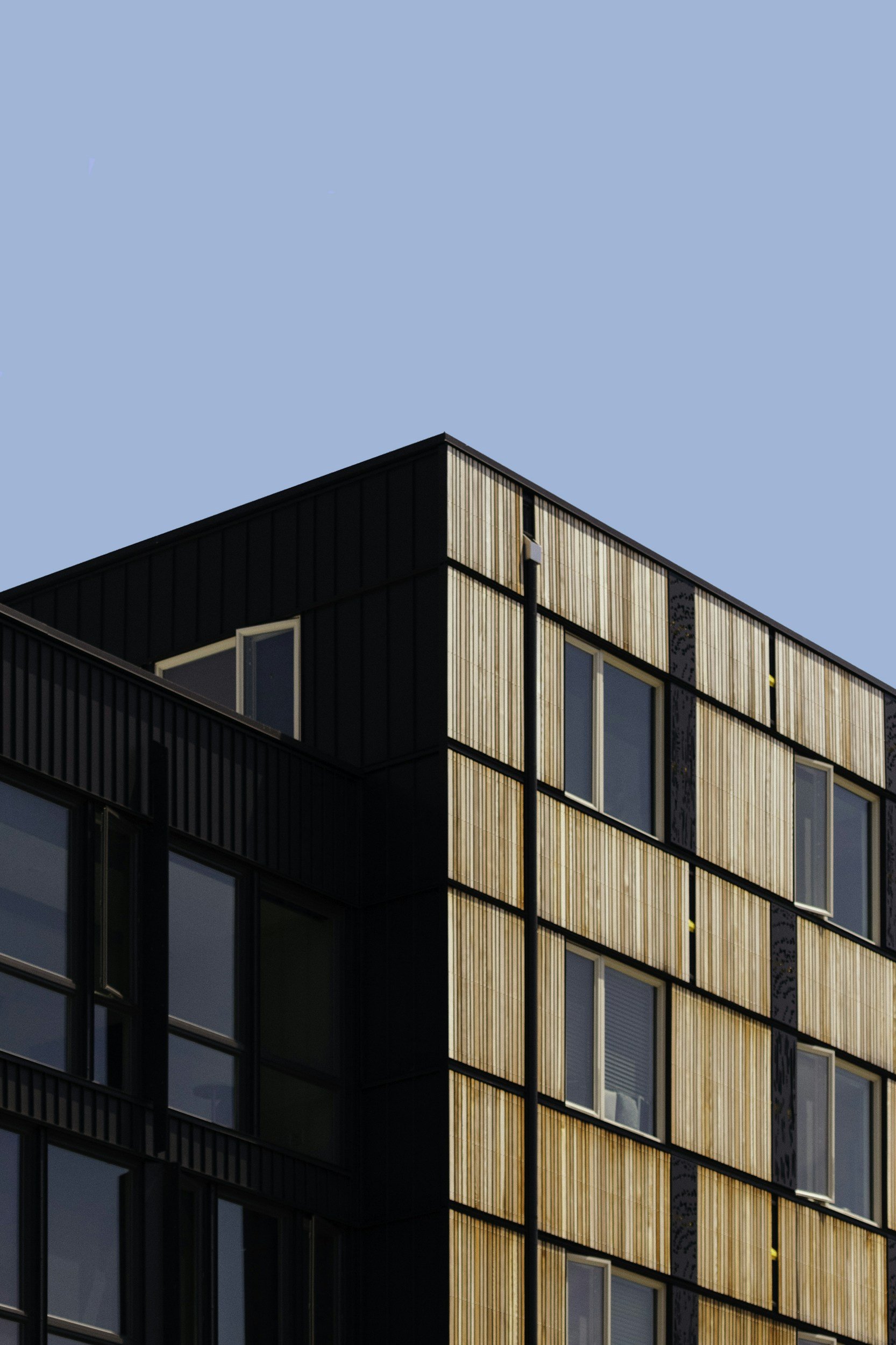
A four-unit manor house on the same site — designed to look like a grand single residence from the street — produces a different financial outcome entirely.
Premium street-facing units are currently achieving $1.25 million to $1.35 million. Rear units are trading at $1.10 million to $1.20 million.
Let's use $1.25 million for two front units and $1.15 million for two rear units.
Manor house project — rough numbers:
Gross Realisation Value: $4,800,000 (2 x $1,250,000 + 2 x $1,150,000)
Land cost: $1,350,000
Construction (Class 2, ~520sqm): $1,900,000
Soft costs, contributions, selling: $400,000
Total Development Cost: approximately $3,650,000
Net profit: approximately $800,000 to $850,000
Margin on cost: approximately 22%
Same land. Same street. Significantly more profit.